

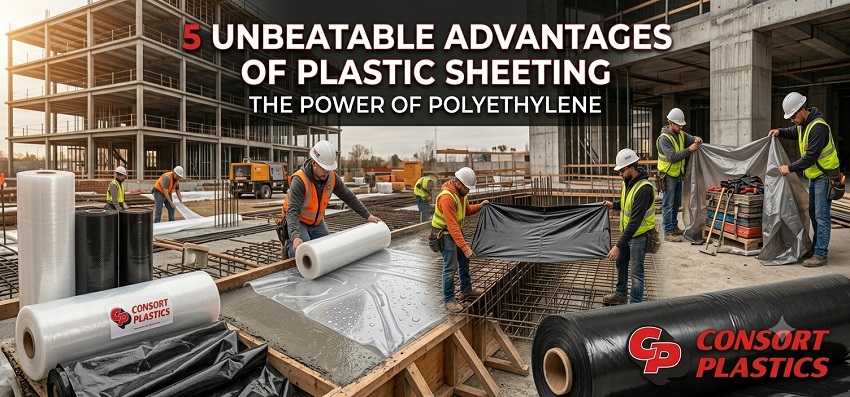
When it comes to job-site protection, DIY home improvements, or agricultural planning, few materials deliver as much value as plastic sheeting (often called poly sheeting or polyethylene film).
Whether you’re a professional contractor sealing off a containment zone, a gardener extending your growing season, or a homeowner painting the living room, plastic sheeting is one of the most versatile and cost-effective tools available.
Here is a look at the key advantages of using plastic sheeting and why it continues to be an essential material across industries.
1. Complete Moisture and Waterproof Protection
One of the most notable properties of plastic sheeting is its impermeability to water.
-
Vapor Barriers: In residential and commercial construction, heavy-duty plastic sheeting is used beneath concrete slabs or between wall frames as a moisture barrier to prevent dampness, mold, and structural rot.
-
Weather Shields: It provides reliable coverage for exposed roof repairs, lumber stacks, or open construction sites during sudden downpours.
2. High Durability and Tear Resistance
Modern plastic sheeting is engineered to handle tough environments. Available in various thickness levels (ranging from light-duty 1-mil film up to heavy-duty 10-mil+ reinforced sheeting), it provides high tensile strength and puncture resistance.
-
Reinforced Options: Woven or grid-reinforced poly sheeting can withstand severe winds, continuous friction, and heavy equipment handling on job sites without ripping.
-
Chemical & Abrasion Resistance: It stands up well against harsh elements, acids, dirt, and rot, keeping covered assets fully protected over long periods.
3. Incredible Flexibility and Ease of Use
Despite its strength, plastic sheeting remains lightweight and highly adaptable.
-
Easy to Drape & Mold: Unlike rigid wood boards or bulky rubber tarps, plastic sheeting can easily wrap around odd-shaped objects, cover large machinery, or line narrow trenches.
-
Customizable Sizing: It comes in conveniently sized rolls that can be quickly cut down using a simple utility knife and taped seamlessly together.
4. Exceptional Climate and Temperature Control
Plastic sheeting is a key component in thermal management for agriculture and workspace containment.
-
Greenhouses & Growing: Clear, UV-treated plastic sheeting traps heat and regulates moisture, creating the perfect microclimate for plants while shielding crops from frost, pests, and wind.
-
Temporary Dust & Heat Containment: Contractors use poly sheeting to create temporary partition walls, keeping paint fumes, silica dust, and heat trapped within specific work zones.
5. Outstanding Cost-Efficiency
When comparing protective barriers, few materials offer as high a return on investment as plastic sheeting.
-
Budget-Friendly at Scale: Because it is lightweight and cheap to manufacture, you can cover thousands of square feet of flooring, crops, or building materials for a fraction of the cost of alternative coverings.
-
Reduces Waste and Labor: Its quick setup saves hours of labor during job-site preparation and cleanup.
Choosing the Right Thickness for Your Project
To get the most out of plastic sheeting, select the right gauge for your application:
| Thickness | Best Uses |
| 1 to 2 Mil | Light dust covers, paint drop cloths, quick temporary wraps. |
| 3 to 5 Mil | General garden covers, DIY furniture protection, light packaging. |
| 6 Mil (Standard) | Certified vapor barriers, crawl space lining, temporary enclosures. |
| 8 to 10+ Mil | Heavy-duty construction, erosion control, long-term outdoor storage covers. |
Whether you need a quick drop cloth or a heavy-duty moisture barrier, plastic sheeting offers an unbeatable combination of strength, flexibility, and value.