

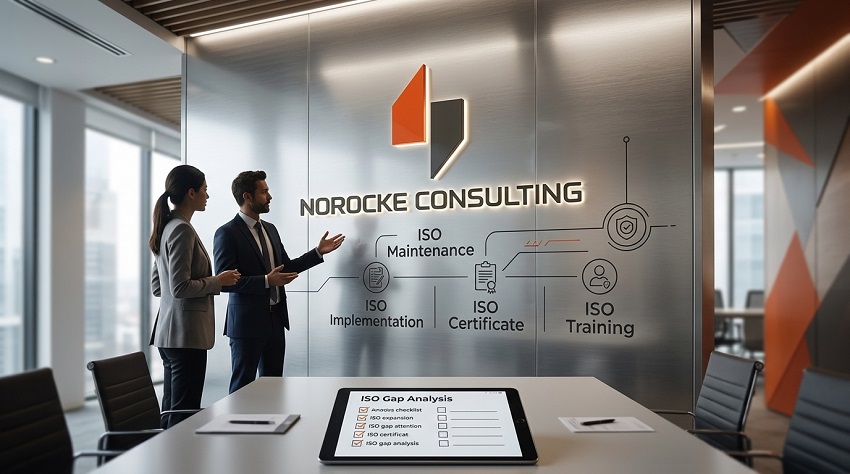
Achieving and maintaining ISO standards requires a clear, structured roadmap. This guide breaks down the four core pillars of the ISO journey—ISO Training, ISO Implementation, securing your ISO Certificate, and long-term ISO Maintenance—so your organization can build a compliant management system that drives business growth.
The 4 Pillars of ISO Excellence
| ISO Lifecycle Phase | Core Focus | Key Objective |
| 1. ISO Training | Workforce skill building | Educate employees on standard requirements and internal audit techniques. |
| 2. ISO Implementation | System design & execution | Gap analysis, process mapping, and policy integration. |
| 3. ISO Certificate | Formal audit & validation | Passing Stage 1 & 2 audits by an accredited certification body. |
| 4. ISO Maintenance | Continual improvement | Surveillance audits, management reviews, and non-conformity tracking. |
Step 1: ISO Training (Building Internal Expertise)
Before changing a single process, your team needs a deep understanding of the relevant ISO standard (e.g., ISO 9001 for Quality, ISO 27001 for Information Security, ISO 14001 for Environmental Management). Effective training ensures alignment from executives to front-line staff.
-
Awareness Training: Teaches the entire team what the standard is and why the company is pursuing it.
-
Lead Implementer Training: Equips project managers with the tools to design system documentation, policies, and workflows.
-
Internal Auditor Training: Prepares select team members to independently review operational compliance.
Step 2: ISO Implementation (Putting Standards into Practice)
ISO implementation translates abstract standard clauses into daily operational habits.
-
Perform a Gap Analysis: Compare your current operational practices against the ISO standard clauses to identify missing controls or documentation.
-
Design & Document: Develop required policies, standard operating procedures (SOPs), and risk registers.
-
Roll Out & Execute: Run your business under the new framework for at least 3 to 6 months to generate measurable records and evidence of compliance.
-
Conduct an Internal Audit: Test your own system to identify non-conformities before the external auditor arrives.
Step 3: Securing Your ISO Certificate (The Formal Audit)
An accredited registrar or certification body evaluates your management system to issue your official ISO Certificate.
-
Stage 1 Audit (Document Review): The external auditor reviews your written procedures and policies to confirm structural readiness.
-
Stage 2 Audit (On-Site/Operational Review): The auditor evaluates actual daily operations, interviews staff, and inspects evidence to confirm compliance.
-
Certification Decision: Once any corrective action requests (CARs) are closed, your official ISO certificate is issued. It remains valid for a 3-year cycle.
Step 4: ISO Maintenance (Ensuring Long-Term Compliance)
Earning your certificate is a milestone, but ISO maintenance protects your investment over time.
-
Annual Surveillance Audits: External certification bodies audit your system yearly during years 1 and 2 to ensure continuous compliance.
-
Management Reviews: Executive teams must regularly review performance metrics, customer feedback, and risk assessments.
-
Corrective Action Tracking: Address root causes of operational issues promptly rather than applying temporary patches.
-
Recertification: A full recertification audit occurs every three years to issue a new certificate cycle.
Best Practices for Seamless ISO Compliance
-
Avoid Over-Documentation: Focus on creating clear, useful processes rather than complex manual systems that nobody uses.
-
Use Quality Management Software (QMS): Centralize document control, automated reminders for maintenance tasks, and non-conformity tracking.
-
Engage Leadership Early: ISO management systems require active executive oversight to remain aligned with strategic business goals