

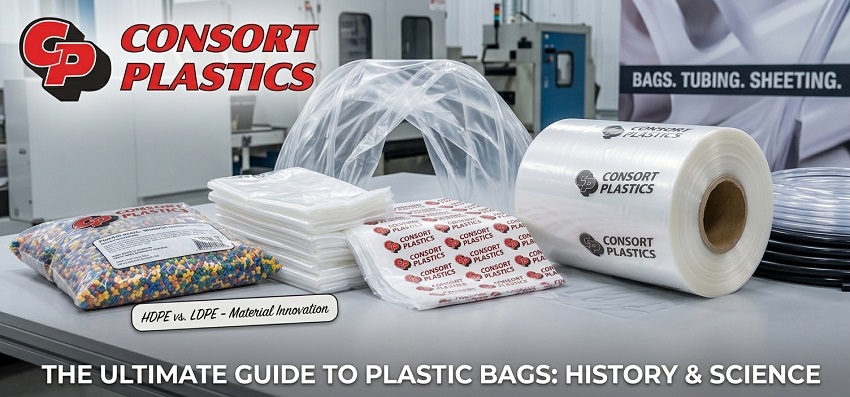
When you pick up a plastic bag, you rarely think about the engineering marvel holding your groceries. It’s light, incredibly strong, waterproof, and cost-effective. But how did this everyday staple become a global standard?
In this comprehensive guide, we dive deep into the world of the plastic bag—from its accidental invention to the fascinating science behind how it’s made and how modern tech is transforming it.
The Surprising History of the Plastic Bag
The story of the modern plastic bag is a masterclass in accidental innovation and brilliant engineering.
-
1933 – The Accidental Discovery: Polyethylene, the most common plastic used today, was created by accident at a chemical plant in Northwich, England.
-
1965 – The Celloplast Patent: Swedish engineer Sten Gustaf Thulin invented the one-piece polyethylene shopping bag we use today. He designed it for Celloplast, patented it globally, and completely changed the retail industry.
-
1980s – The Retail Takeover: By the early 1980s, major supermarket chains around the globe officially switched from paper to plastic bags, driven by their superior durability and lower production costs.
How Are Plastic Bags Made? (The Science Behind the Bag)
Have you ever wondered how raw oil or natural gas turns into a flexible, durable carryall? The manufacturing process is called blown film extrusion.
Here is how a standard plastic bag comes to life:
-
Melting: Small pellets of polyethylene resin (HDPE or LDPE) are melted down under intense heat until they form a thick, molten liquid.
-
Blowing the Film: This molten plastic is forced through a circular die, and air is blown into the middle of it. This creates a massive, continuous tube of thin plastic film, much like a giant balloon.
-
Cooling and Flattening: The giant tube travels upward to cool down before being flattened by rollers into a dual-layered sheet.
-
Cutting and Sealing: The flattened sheets are rolled up, printed on, cut to size, and sealed at the bottom using heat. Finally, the handles are punched out.
HDPE vs. LDPE: What’s the Difference?
Not all plastic bags are created equal. If you feel the texture of different bags, you’ll notice two distinct types dominating the market:
| Feature | HDPE (High-Density Polyethylene) | LDPE (Low-Density Polyethylene) |
| Texture | Crinkly, thin, and rustly | Smooth, thick, and flexible |
| Strength | High tensile strength; resists tearing under heavy loads | High puncture resistance; stretches easily |
| Common Uses | Grocery bags, t-shirt bags, trash liners | Boutique shopping bags, heavy-duty sacks |
Beyond Groceries: The Versatility of Plastic Sacks
While grocery shopping is the most common association, plastic bags serve vital roles across various critical industries due to their sterile, barrier-protecting properties:
-
Medical and Healthcare: From biohazard bags to sterile packaging for surgical tools, plastic films protect against contamination.
-
Agriculture: Silage bags protect grain and livestock feed from weather and pests, ensuring food security.
-
Logistics and Shipping: Heavy-duty plastic shipping sacks keep mail and products completely dry during transit.
The Next Generation: Smart and Innovative Plastic Bags
The plastic bag industry isn’t standing still. Modern engineering is pushing the boundaries of material science to create highly advanced, functional alternatives:
-
Antimicrobial Bags: Infused with silver ions or zinc to inhibit bacteria growth, making them perfect for food transport.
-
Water-Soluble Tech: Sacks made from polyvinyl alcohol (PVA) that dissolve safely in hot water, currently being used in industrial and medical laundry settings to minimize contact with contaminants.
-
High-Barrier Films: Multi-layered specialized plastics designed to keep oxygen completely out, drastically extending the shelf-life of fresh food.
Frequently Asked Questions (FAQs)
What material is a plastic bag made of?
Most plastic bags are made from polyethylene, a polymer derived from natural gas or petroleum. The two primary types used are High-Density Polyethylene (HDPE) and Low-Density Polyethylene (LDPE).
Who invented the plastic shopping bag?
The modern t-shirt style plastic shopping bag was invented by Swedish engineer Sten Gustaf Thulin in 1965.
Are plastic bags waterproof?
Yes. Because polyethylene is a non-porous polymer, plastic bags provide an excellent barrier against water, moisture, and air, which is why they are widely used for protective packaging.